5 Process Models Examples and Benefits
5 Process Models Examples and Benefits

Topic: Business process management focuses on how the enterprise operates and delivers the results i.e. products and services to external and internal customers.
Process models represent an abstract view of a business process and serve as a blueprint for implementing or improving it. A process model describes how the process works, what steps are involved, and how those steps are performed.
Process models can be designed in business process management software or enterprise architecture platforms. We advise and promote designing business processes on an enterprise architecture platform, such as Bizzdesign Horizzon, because it helps you to design and execute transformations effectively. The benefits of this are described below.
Benefits of business process models (and examples)
Transparency
Process models help everyone understand the processes that exist within an organization and identify who is responsible and accountable for each activity. It also allows employees to understand the bigger picture better and how their work influences the outcomes and the work of others.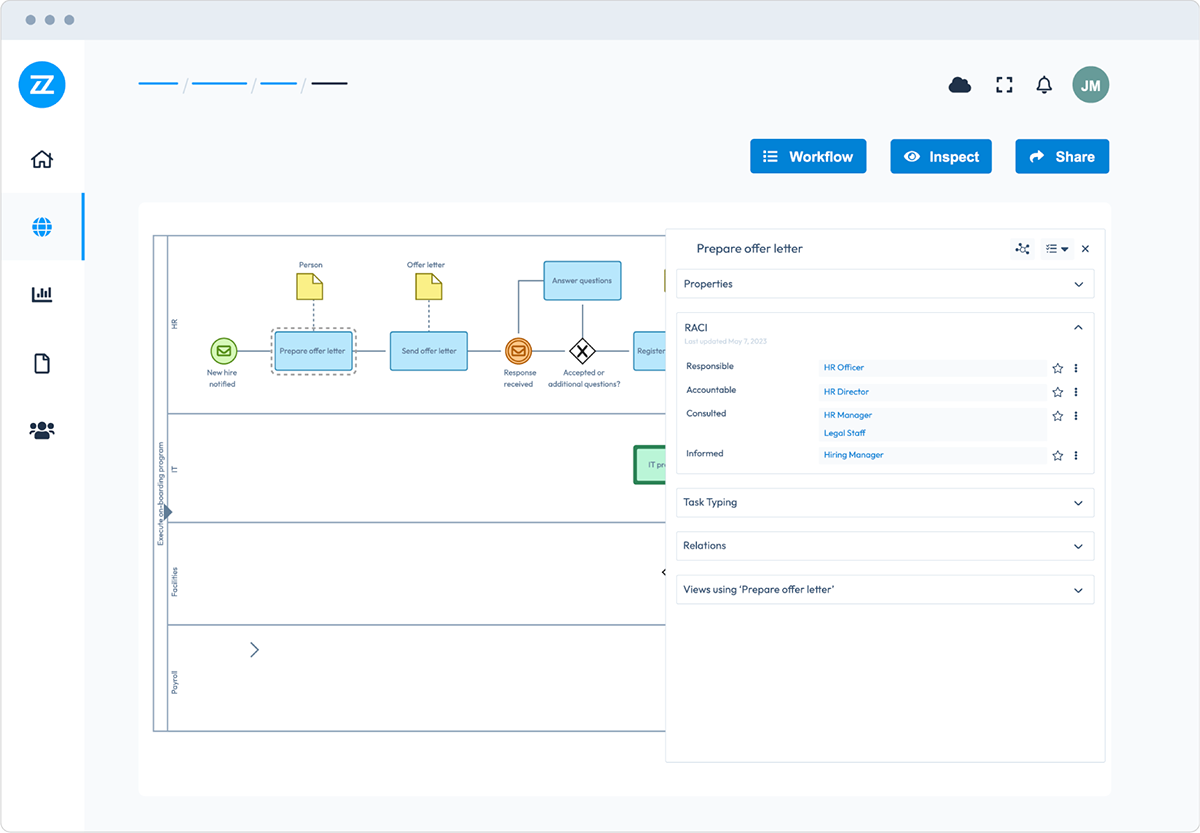
Summary
Business Process Management (BPM) empowers process teams with a guided framework for designing, modeling, and managing enterprise-wide process architecture. It includes ready-to-use framework templates and interactive management dashboards that align operational processes with strategic business goals. With this solution, teams can model processes at multiple levels of detail, seamlessly integrated with the broader enterprise architecture to gain critical insights and drive successful transformation initiatives.