Confirmation | Where Strategy Meets EA

Confirmation | Where Strategy Meets EA

Thank you for registering for our webinar on 5th May!

Your registration is confirmed. You’ll receive an email shortly with all the login details.

See you then!

The Bizzdesign Team


Confirmation | From Mandate to Action: Governing AI Before It Governs You

Confirmation | From Mandate to Action: Governing AI Before It Governs You

Thank you for registering for our webinar From Mandate to Action: Governing AI Before It Governs You

Your registration has been confirmed! You’ll receive an email shortly with all the details to join the session.

See you on April 9th,

The Bizzdesign Team


Confirmation | Bizzdesign Circle Event - Toronto

Confirmation | Bizzdesign Circle Event - Toronto

Thank you for registering for our Bizzdesign Circle Event in Toronto!

Your registration is confirmed. You’ll receive an email shortly with all event details.

See you in Canada, 

The Bizzdesign Team


Confirmation | Bizzdesign Circle Event - Montreal

Confirmation | Bizzdesign Circle Event - Montreal

Thank you for registering for our Bizzdesign Circle Event in Montreal!

Your registration is confirmed. You’ll receive an email shortly with all event details.

See you in Canada,

The Bizzdesign Team


5 Steps to Confidently Quantify Initiative Benefits

5 Steps to Confidently Quantify Initiative Benefits

Gartner®  Research
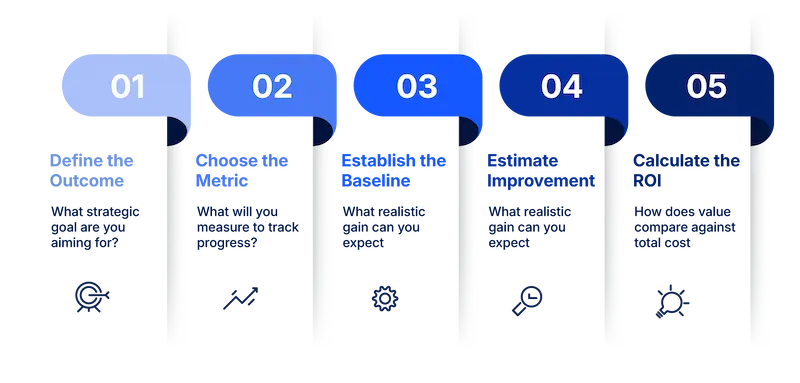
A 5-step methodology to help you defend your investment decisions with evidence.
Gartner 5 Steps to Confidently Quantify Initiative Benefits (How to Prove ROI)

Benefit Quantification Is Now a Core Portfolio Capability

Under rising cost pressure and increased scrutiny, portfolio leaders must show clear, validated impact before capital is allocated. Inconsistent calculations and disconnected business cases make that difficult.

This research outlines a practical framework to structure outcomes, establish baselines, estimate improvement, and calculate ROI so funding decisions are grounded in measurable impact.

Get Your Complimentary Copy!


Gartner®, 5 Steps to Confidently Quantify Initiative Benefits, By Cynthia Phillips, Jennifer Jackson, 24 November 2025. Gartner is a trademark of Gartner, Inc. and/or its affiliates.

See How Leading Organizations Connect Benefit Quantification to Portfolio Decisions

Strategic portfolio management connects quantified benefits to prioritization, resource allocation, and portfolio trade-offs.

Strategic Portfolio Management

Strategic Portfolio Management

Too Many Priorities? Fund the Right Ones
With Strategic Portfolio Management

Run IT Like a Business

Whether you're delivering new products, streamlining for efficiency, or meeting regulatory demands, Strategic Portfolio Management ensures resources are allocated where they drive the most impact –– eliminating waste and maximizing value.

Focus Resources. Accelerate Results.

  • Align investments with strategic goals.
  • Deliver more initiatives on time and on budget.
  • Eliminate waste and boost resource efficiency.
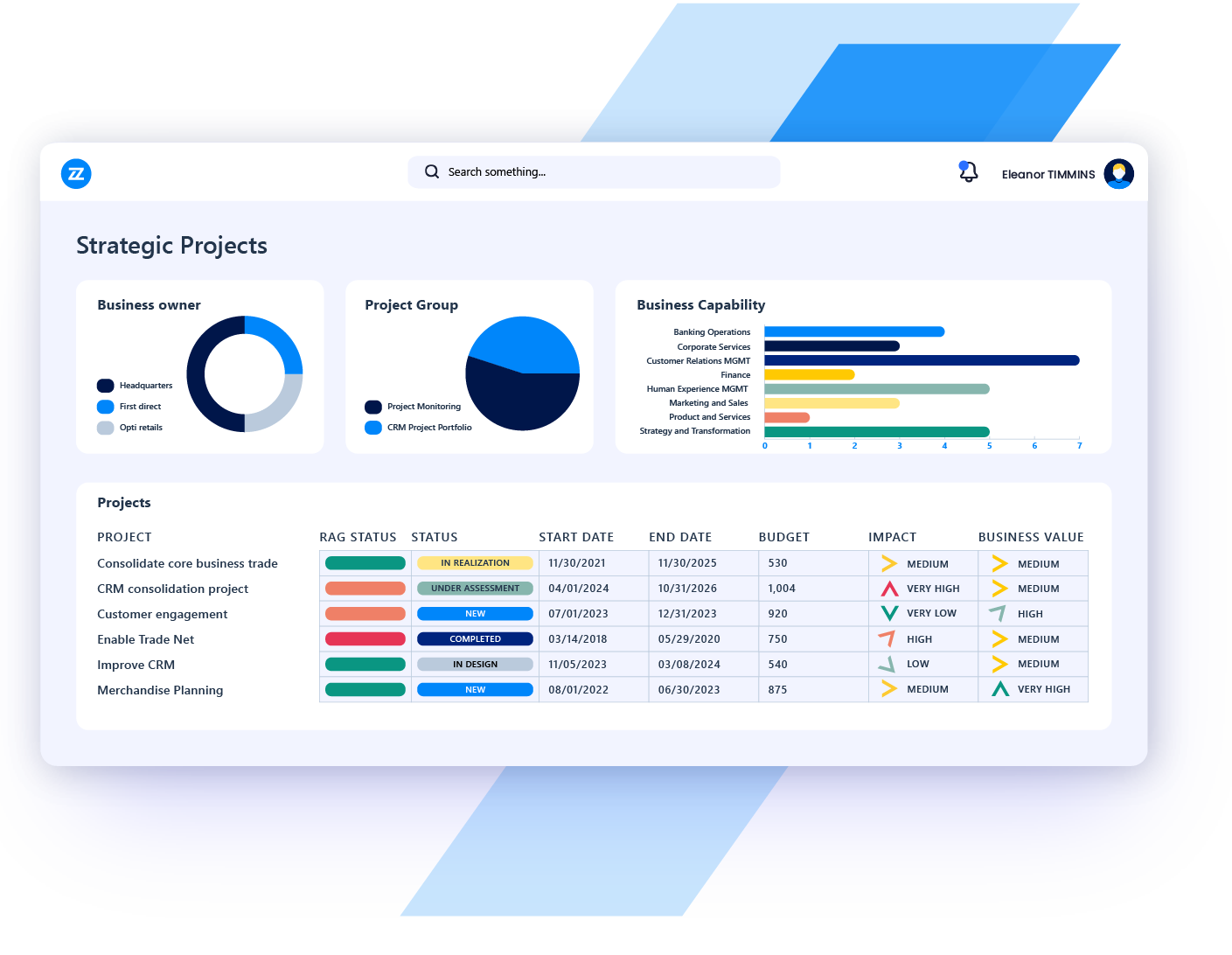
strategic portfolio management use case business strategy alignment

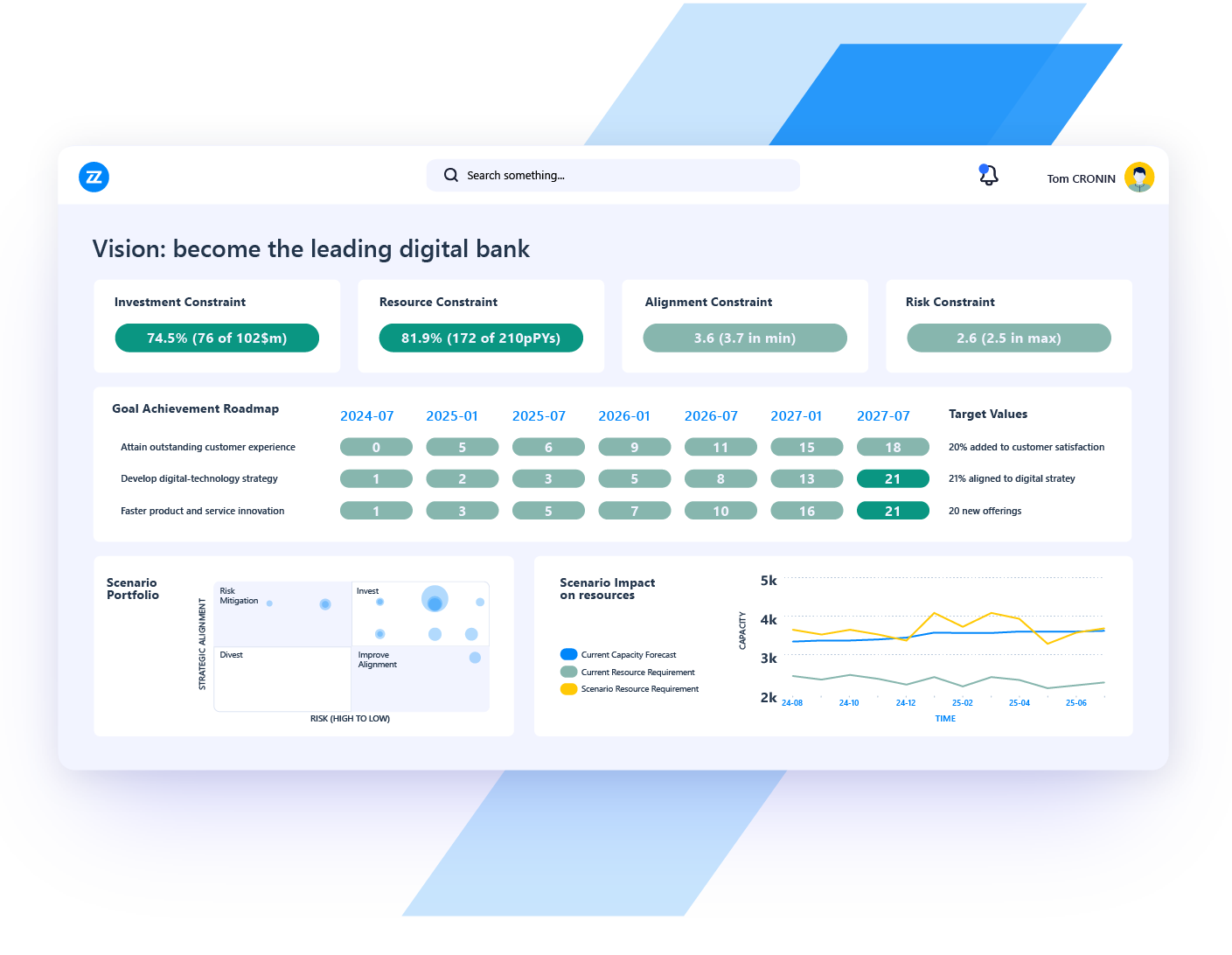
Business Strategy Alignment

Realize Strategy Faster

  • Define business outcomes and track them with meaningful metrics.
  • Align investments with strategy using future-state analysis.
  • Balance the portfolio of initiatives incorporating value, speed, and risk.
strategic portfolio management use case it investment optimization

IT Investment Optimization

Drive Business Priorities

  • Gain visibility into active and planned project investments.
  • Focus investment on strategic capabilities.
  • Prioritize investments based on alignment and impact.
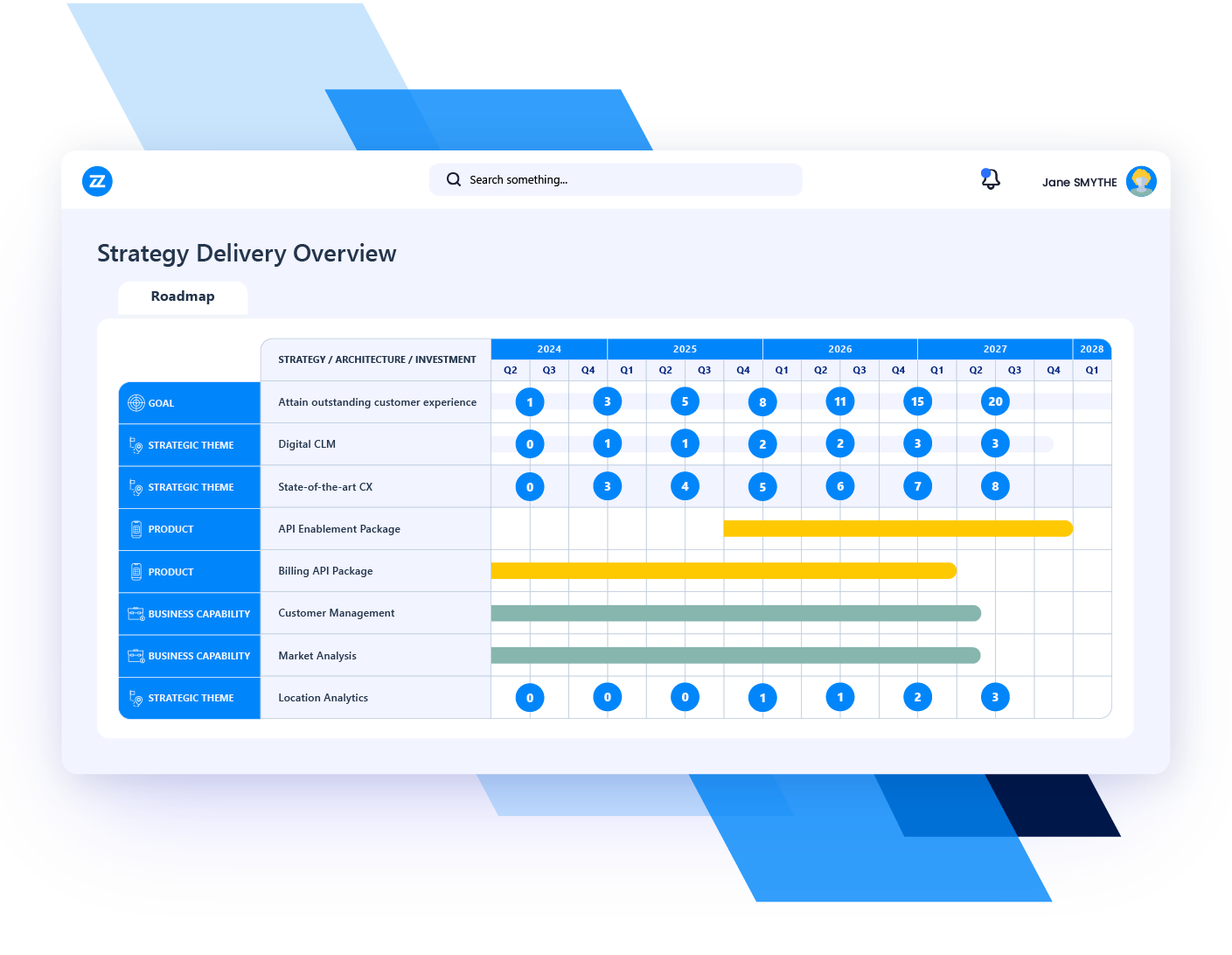
strategic portfolio management software use case strategic roadmapping

Strategic Roadmapping

Keep Strategy Moving Forward

  • Connect strategy, investments, initiatives and architecture in one view.
  • Anticipate bottlenecks and conflicts to accelerate delivery.
  • Adjust quickly to shifting business conditions while maintaining alignment.
 
Fund What Matters. Deliver More.

Prioritize the right initiatives, maximize resource impact, and keep strategy on track.

Enterprise AI Adoption: Balancing Innovation and ROI in 2026

Enterprise AI Adoption: Balancing Innovation and ROI in 2026

January 19, 2026 - Nick Reed - AI in Enterprise Architecture & Transformation

Enterprises are investing billions into artificial intelligence, yet most still struggle to show what they gained from it. Recent Forrester research reveals only 15% of AI decision-makers reported a positive impact on profitability in the past 12 months, and fewer than one-third can link AI outputs to concrete business benefits. The gap between expectations and reality has become so wide that Forrester predicts a market correction, with enterprises deferring 25% of planned 2026 AI spend into 2027.

The signal is hard to ignore: the value hasn’t landed yet.

For technology leaders, this creates a strategic dilemma. Pause – or slow down – AI investment, and you risk falling behind competitors who successfully manage to operationalize AI. Or continue spending while hoping to establish clear line of sight to ROI, and you're risking budgets, credibility, and shareholder confidence. The pressure is on, and neither option is comfortable.

Analysts are largely aligned that organizations should ignore hype, concentrate on tangible outcomes, and reinforce the foundations that ensure AI delivers value: visibility into how AI connects to existing systems and processes, governance to evaluate what's working, and alignment between AI investments and strategic priorities. But what does that mean in practice? 

The Root Causes of AI Project Failure

The last two years were about running experiments and testing hypotheses. Now organizations face a fundamentally different challenge: deciding which ones to scale and building the governance to scale it safely.

FAQs

Many AI initiatives fail not because the technology underperforms, but because organizations lack visibility, governance, and alignment needed to scale successfully. The breakdown happens at the organizational level: in how AI projects are selected, whether there's governance to evaluate what's working, how initiatives relate to existing enterprise capabilities and assets, and whether outcomes are measured objectively in terms of business benefits and P&L impact with line of sight to strategic goals. Without visibility, governance, and alignment,, teams can’t assess dependencies, manage risk, measure outcomes, or make evidence-based decisions about which initiatives to scale. 

The challenge is deciding which AI initiatives to scale and building the governance to scale it safely. Organizations need the right approach to fail fast, the governance to evaluate objectively what's working, and the discipline to make evidence-based decisions about what to scale. Without these foundations, AI investments multiply in silos, fragmentation increases, and promising use cases stall. Moving from isolated pilots to enterprise-wide impact requires a shared architectural view, clear governance structures, and the ability to plan, design, and govern AI as part of broader transformation.

Delivering AI value at scale requires three foundational elements:

  • Visibility into the enterprise landscape — systems, processes, data flows, risks, dependencies.
  • Governance that defines clear decision rights, evaluation criteria, and accountability for outcomes.
  • Alignment between AI investments and strategic business priorities.

These elements create the conditions for AI to move from isolated pilots to enterprise-wide capability rather than producing disconnected efforts that fail to deliver value. Bizzdesign’s Enterprise Transformation Suite gives organizations the visibility, governance, and alignment needed to move AI from isolated pilots to sustainable, enterprise-wide impact.

The strongest AI use cases to scale are the ones where teams have a clear line of sight into how the initiative connects to the rest of the business. Companies should prioritize use cases that:

  • Align directly with strategic objectives, rather than emerging from isolated experimentation
  • Have clear visibility into the systems, processes, and data they rely on, so dependencies and risks are understood upfront
  • Fit within existing governance structures, allowing teams to evaluate impact, effort, and accountability
  • Include defined success criteria, making it possible to measure outcomes once deployed

Selecting use cases without understanding dependencies or strategic relevance leads to fragmented efforts, overlapping pilots, rising technical debt, and limited ROI — which is why many promising initiatives never reach operational scale.

Enterprise architecture gives organizations the visibility they need to understand how AI connects to existing systems, processes, data flows, and risks. A shared architectural view helps teams see dependencies upfront, avoid overlaps, and prevent the fragmentation that causes pilots to stall. Enterprise architecture also helps ensure AI initiatives align with strategic priorities and can be governed consistently across the business, turning isolated experiments into scalable enterprise capabilities. By providing the structural context for decision-making, EA enables AI investments to deliver measurable value and supports the shift from experimentation to scaling what works.