Business Architecture and IT Architecture: Bridging the Gap Between Strategy and Execution

Business Architecture and IT Architecture: Bridging the Gap Between Strategy and Execution

Framing the Conversation

A well-designed business architecture is essential in a world of continuous transformation if a company desires to be the disruptor and not the disrupted. Modern business architecture recognizes the indispensable role of IT architecture in ensuring successful transformation outcomes; in fact, business architecture and IT architecture are two sides of the same coin.

FAQs

Business architecture is a structured blueprint of how an organization works, capturing its capabilities, processes, information flows, and technologies, and showing how they all connect to support the overall business strategy.

Think of it as a complete picture of the enterprise: it maps where the business is today, where it wants to go, and what needs to change to get there. It connects high-level strategic goals with day-to-day operations, providing a framework for planning, execution, and continuous improvement.

Business architecture is not a one-time project, it's an ongoing journey. Organizations that treat it as a static deliverable risk falling behind as markets shift and technology changes. The most resilient companies maintain their business architecture continuously, adapting it as their strategy evolves.

A business architect translates an organization's strategy into a clear, actionable framework that guides how the business should be structured and operated. Their core responsibilities include:

  • Mapping business capabilities: identifying what the organization does and how well it does it
  • Aligning strategy with execution : ensuring that day-to-day activities are connected to long-term goals
  • Bridging business and IT : working with IT architects to make sure technology decisions support business outcomes
  • Identifying gaps : spotting misalignments between where the business is and where it needs to be
  • Enabling change : providing the methodology and frameworks that make transformation manageable

Business architects act as translators between strategic leadership and operational teams, making the invisible visible and helping organizations make better decisions faster.

Business architecture and IT architecture are two sides of the same coin, distinct disciplines that must work together to drive successful transformation.

Business architecture focuses on the strategic and operational layer: it defines the organization's capabilities, value streams, processes, and how they connect to business goals. It answers the question: "How does our organization create value?"

IT architecture provides the technological backbone that supports and enables that business design. It encompasses:

  • Application architecture : the structure of technology systems and automation
  • Data architecture : how data is organized, governed, and aligned to business context
  • Technical architecture : the physical and logical infrastructure for deploying and managing systems

The key difference is scope: business architecture defines what the organization needs to do; IT architecture defines how technology will support it. Without alignment between the two, even the best strategies fail at execution.

When business architecture and IT architecture are aligned, they form a continuous loop between strategy and execution. Business architecture defines the direction, the capabilities, goals, and transformation priorities. IT architecture translates those requirements into technology systems, data structures, and infrastructure that make execution possible.

This alignment requires five foundations:

  1. A unified language : a shared vocabulary so business and IT teams can communicate clearly without ambiguity
  2. Data-driven context : using qualitative and quantitative data to ground architectural decisions in reality
  3. IT leadership at the table : treating the CIO and IT organization as strategic partners, not service providers
  4. Active alignment practices : continuously reconciling business priorities with IT capabilities
  5. Advanced visualization tools : software that makes the architecture visible and navigable for all stakeholders

When these are in place, organizations can move from reactive, crisis-driven architecture to a proactive framework that evolves with the business.

Misalignment between business and IT is one of the most common (and costly) reasons transformations fail. History offers stark examples: Kodak, Xerox, and Blockbuster all collapsed in part because their technology strategies drifted away from their business realities.

According to a Harvard Business Review study, 62% of large organizations view their IT department as either a service provider or a cost center... not as a strategic partner. This mindset creates silos that slow decision-making, increase costs, and reduce agility.

When business and IT architecture are aligned, organizations can:

  • Translate strategy into concrete, executable steps
  • Respond faster to market disruption
  • Eliminate ambiguity in cross-functional decision-making
  • Drive transformation from a business perspective rather than a purely technology one
  • Connect technology investments to measurable business outcomes

Business architecture bridges strategy and execution by making the connection between high-level goals and operational activity explicit, structured, and manageable.

Without it, strategy often stays locked in boardroom presentations while day-to-day teams operate disconnected from those ambitions. Business architecture closes this gap by:

  • Mapping capabilities to strategic objectives, so teams understand why their work matters
  • Identifying gaps between the current state and the target state
  • Providing a shared framework that aligns leaders, architects, IT teams, and operations around a common view of the business
  • Supporting scenario planning so organizations can model change before committing to it
  • Enabling continuous improvement rather than one-off transformation projects

The result is an organization that can act on its strategy — not just articulate it.

A business architecture diagram is a visual representation of how an organization's key components (capabilities, value streams, processes, data, and technologies) relate to each other and to the overall strategy.

Common types of business architecture diagrams include:

  • Capability maps : showing what the organization does, organized by domain
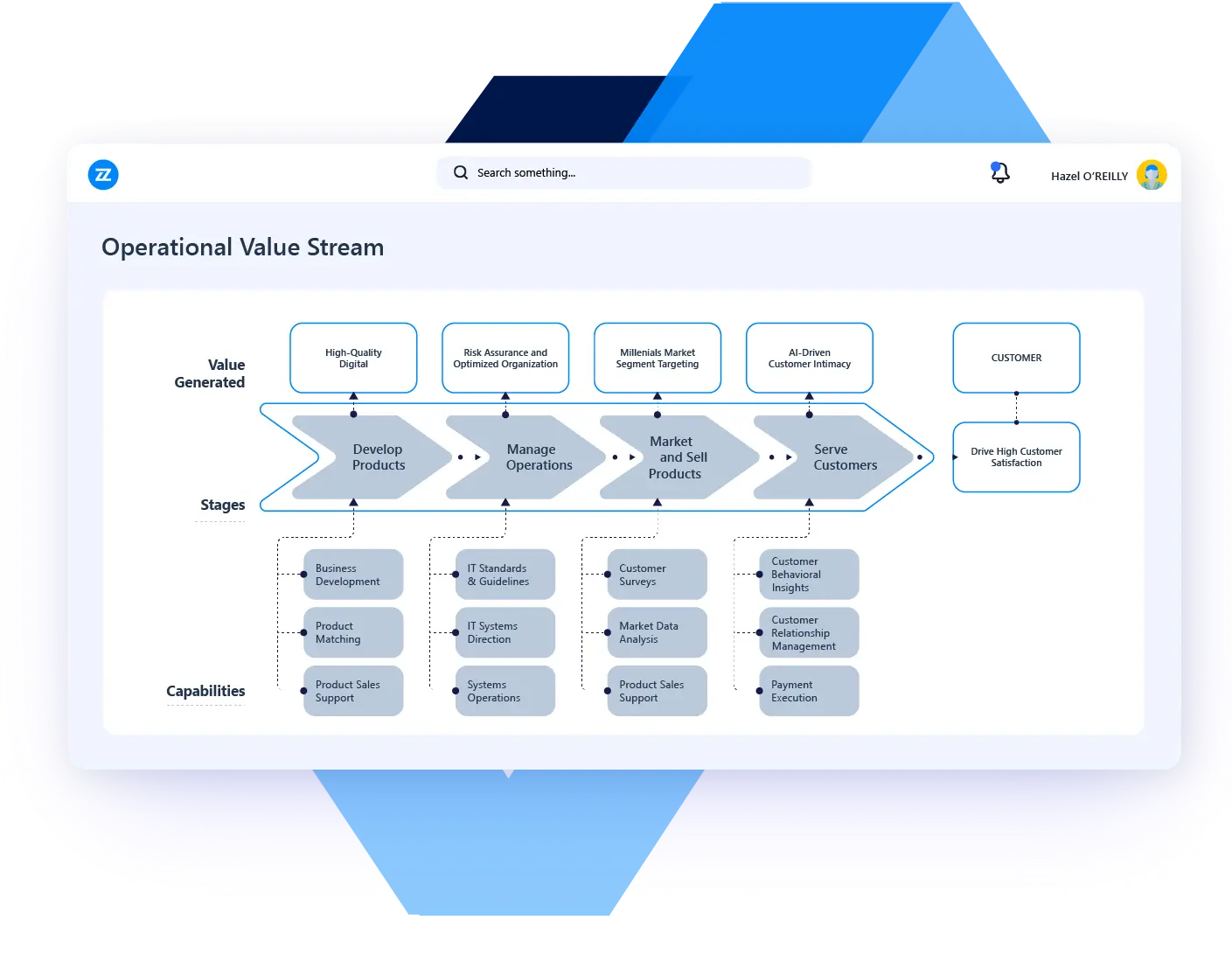
  • Value stream maps : illustrating how value flows through the business from input to customer outcome
  • Strategy maps : connecting strategic objectives to the capabilities needed to achieve them
  • Heat maps : highlighting areas of strength, weakness, or investment priority across capabilities

These diagrams are used by business architects, enterprise architects, and senior leaders to make complex organizations understandable at a glance. Supporting faster, better-informed decisions about where to invest, what to change, and how to sequence transformation initiatives.

Modern tools like Bizzdesign's Enterprise Transformation Suite go beyond static diagrams, enabling dynamic "digital twin" models that allow organizations to simulate different scenarios and assess the impact of strategic choices before acting on them.


Business Architecture vs. Enterprise Architecture: Understanding the Differences and Benefits

Business Architecture vs. Enterprise Architecture: Understanding the Differences and Benefits

Summary

Business and enterprise architecture are essential for companies to achieve their goals and remain competitive. Business architecture defines the design and structure of business processes, while enterprise architecture spans the entire organization, including business processes, technology, and data. 

By understanding the differences between business architecture and enterprise architecture, businesses can develop a comprehensive strategy for achieving their objectives and staying ahead of the competition. 

Business architecture and enterprise architecture are two terms often used interchangeably, but they have distinct differences. Both fields are important for businesses, and understanding their differences is crucial to successfully implementing them within an organization. Let's explore the difference and how they align with organizational goals. 

Differences Between Business Architecture vs.

FAQs

Business Architecture designs and documents business aspects such as strategy, processes, capabilities, and organization. In contrast, Enterprise Architecture encompasses a broader scope, including technical and information architecture and business architecture, enabling the organization to align its business and IT goals. 

A Business Architect is responsible for designing and documenting the business value chain, business capability architecture, business processes, and business stakeholders. They focus on utilizing the business architecture domain to achieve the organization's goals. 

An Enterprise Architect is responsible for designing and implementing enterprise architecture components, including business design, technology architecture, and application architecture. They ensure that all enterprise architecture components are aligned with the organization's objectives and work towards improving the architecture practice within the enterprise. Learn more about The Role of Enterprise Architect.

An architecture framework provides the blueprint of the enterprise, and it outlines the architecture domain in which the organization operates. It offers the necessary structure to design, document, and deploy effective architectural solutions that meet the business's objectives.  Learn more about Enterprise Architecture Framework.

Technology Architecture is a component of Enterprise Architecture that defines the principles, standards, and guidelines for implementing and managing technology infrastructure within an organization. 

Business Architects are responsible for clearly understanding how an existing business operates. At the same time, Enterprise Architects create and maintain a conceptual and technical view of the enterprise that provides a common understanding of the business functions, processes, and underlying technology. 

Enterprise Architecture Framework focuses on aligning all the components within an organization, while Business Architecture framework focuses on the business value. 

Business Architects are responsible for designing and documenting the organization's business aspects. At the same time, Enterprise Architects are responsible for the design and implementation of all components of enterprise architecture, including business architecture. 

Business Architect's target audiences are business executives, stakeholders, middle-management, and operational staff. Enterprise Architects' target audiences are IT executives, IT staff, security personnel, procurement personnel, and business stakeholders. 

Benefits of using Business Architecture include more effective business strategies, increased efficiency and productivity, reduced ambiguity in communication, and more effective measurement of business performance. Benefits of using Enterprise Architecture include more effective alignment between different departments, more effective use of resources, a more agile and forward-looking IT department, and a better ability to leverage emerging technologies. 

Yes, both business architecture and enterprise architecture can be applied in various industries, including but not limited to finance, healthcare, manufacturing, and technology. The principles and methodologies can be tailored to suit different industries' specific needs and requirements. 

While organizations don't need to have dedicated roles for business and enterprise architects, having specialized professionals can significantly contribute to the effectiveness of these frameworks. They bring expertise and knowledge that can drive successful implementation and ensure the optimal alignment of business and technology. 

Various online resources, including books, articles, and industry-specific publications, provide in-depth insights into business and enterprise architecture. Additionally, attending conferences, workshops, and professional training programs by MEGA International can help you and organizations comprehensively understand these frameworks and their applications. 

Business Architecture and Enterprise Architecture work together to create a comprehensive and holistic view of an organization. Business Architecture focuses on a business model's structure, operations, and governance. In contrast, Enterprise Architecture focuses on how an organization can align its technology and processes with overall business strategy and value streams. They can help an organization create a more cohesive and effective operational environment. 


Bizzdesign Announces New Leadership Team Following Merger With MEGA and Alfabet

Media Contact

For media, analyst, and speaking inquiries, please contact us.

press@bizzdesign.com

Bizzdesign Announces New Leadership Team Following Merger With MEGA and Alfabet

May 27, 2025

Utrecht, Netherlands, May 27, 2025

Bizzdesign, a leading enterprise transformation SaaS company, today announces its new Leadership Team for the combined organization following its merger with MEGA International and Alfabet. Operating under the unified name Bizzdesign, the company solidifies its position as a global leader in enterprise transformation.

About Bizzdesign

Bizzdesign is a global enterprise transformation SaaS company, offering an end-to-end suite spanning Enterprise Architecture, Strategic Portfolio Management, Governance, Risk & Compliance, and Transformation Collaboration. Through a data-driven and AI-powered approach, Bizzdesign accelerates transformation from vision to value by enabling teams to plan, design and govern change collaboratively. 


Business Architecture Management

Business Architecture Management

Strategy Stalling? Close The Gap 
With Business Architecture Management 

Toyota
Natwest
Experian
Airbus
Vodafone
HSBC
Shell
NHS
Tata

Put Customers at the Center of Transformation

Customer needs and operational priorities can easily fall out of sync. Business Architecture Management provides an end-to-end view of value creation and its connection to strategy, capabilities, and operating models so you can drive impact where it matters most.

Align Capabilities. Accelerate Outcomes.

  • Turn insight into execution across teams.
  • Spot capability gaps early and prioritize the smartest initiatives.
  • Reduce misalignment and accelerate time-to-value.
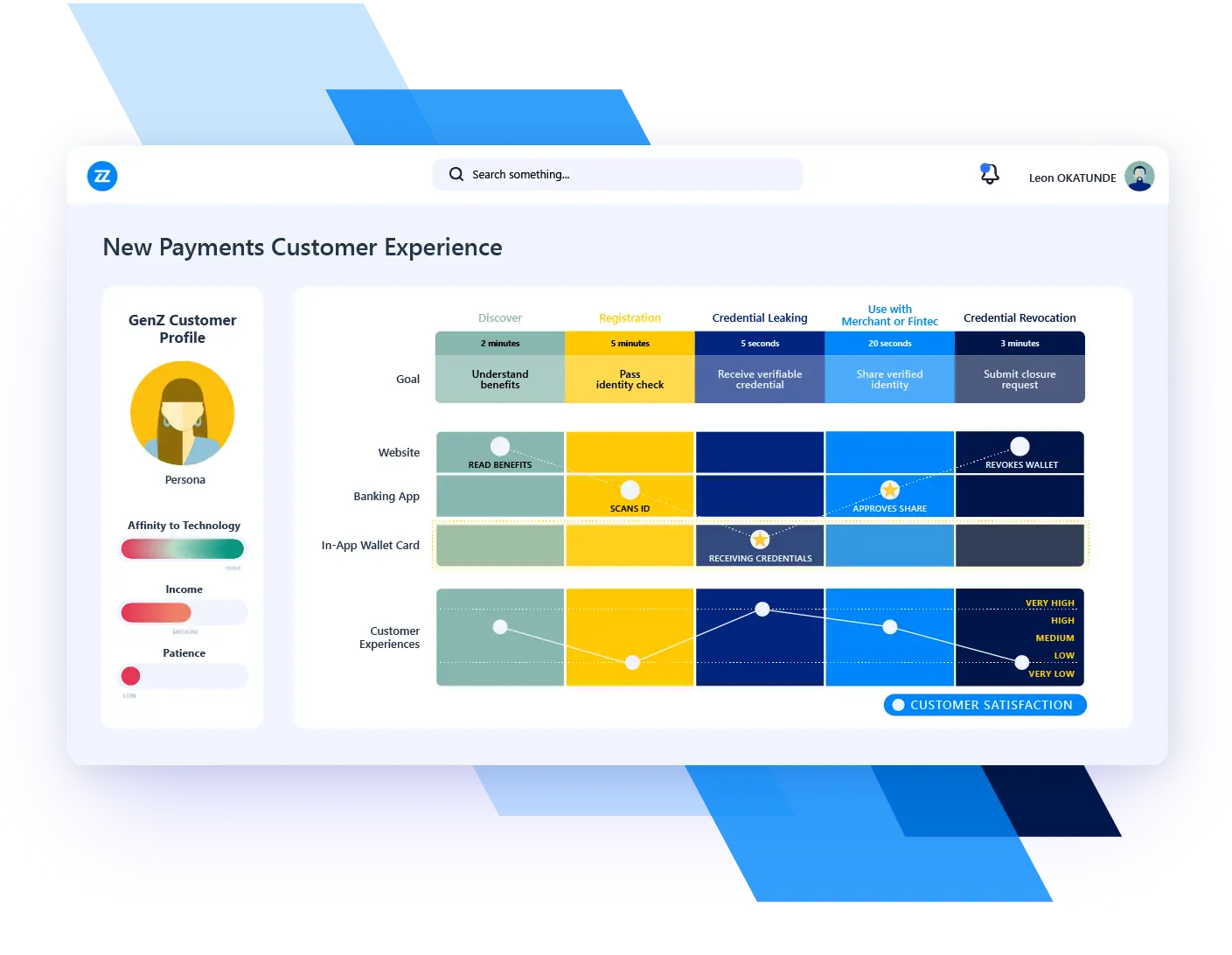
business architecture management use case customer experience innovation

Customer Experience Innovation

Transform Around Customer Needs 

  • Map and align customer journeys to business goals and architecture.
  • Identify and prioritize improvements using pain points and impact analysis.
  • Accelerate transformation by incorporating all capabilities and dependencies.
business architecture management use case value stream management

Value Stream Management

Drive Measurable Business Impact

  • Connect value streams with customer journeys, processes, capabilities, and strategy.
  • Expose dependencies across people, processes, data, and technology.
  • Drive high-impact value creation through coordinated value stream performance improvements.
business architecture management use case capability-based planning

Capability-Based Planning

Bridge the Strategy-to-Execution Gap

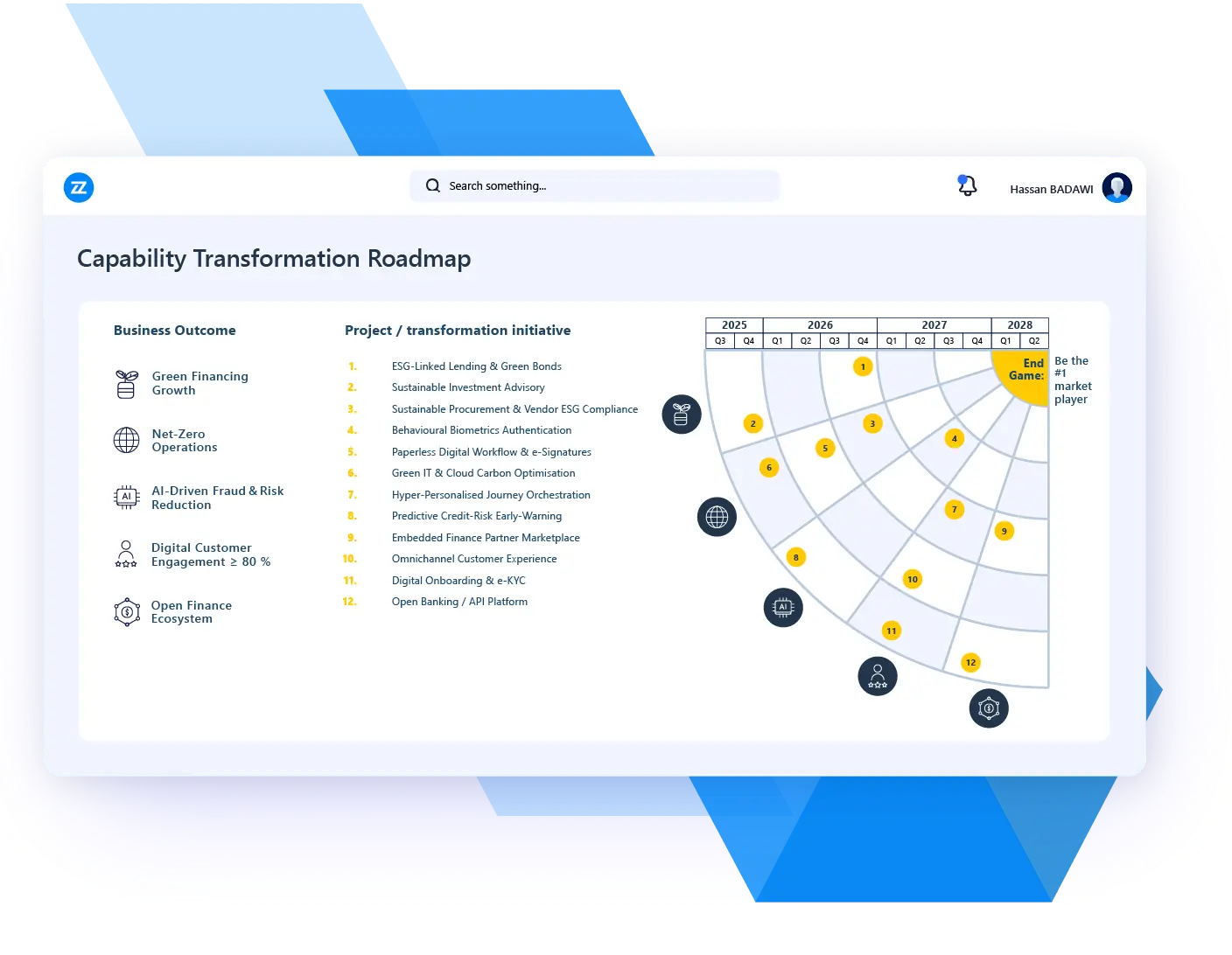
  • Uncover capability gaps with maturity and strategy assessments.
  • Optimize closure plans through scenario analysis and investment prioritization.
  • Build roadmaps tied to funding and capability improvement.
 
Prioritize Smarter. Deliver Results.

Spot capability gaps, prioritize the right investments, and accelerate transformation around what matters most.